Sink or Swim: Why Standing Still is No Longer a Strategy for B2B Marketers
LISTEN &
DOWNLOAD ON:


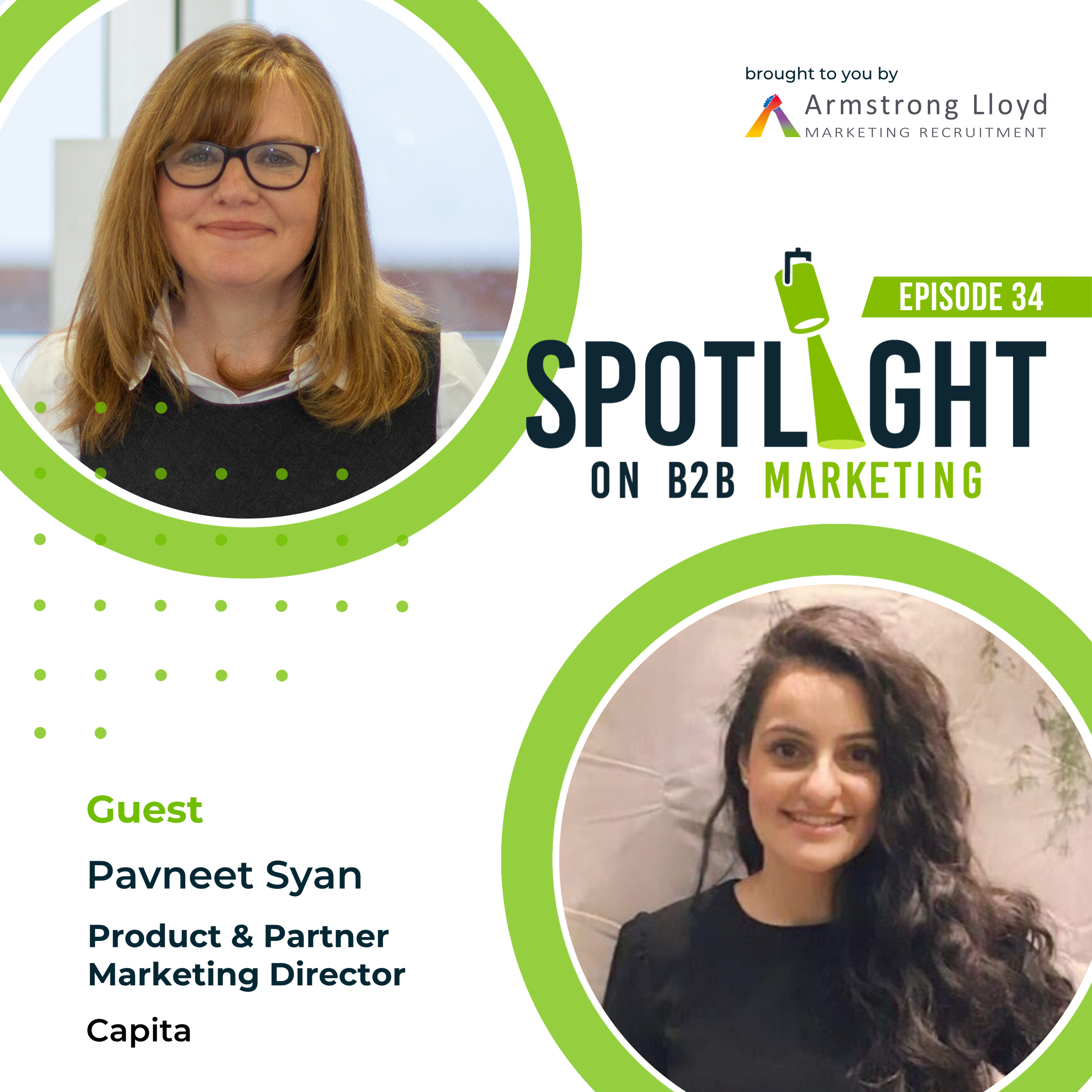
The pace of change in business has never been faster. AI is accelerating transformation across entire industries, and the macroeconomic pressure on organisations to do more with less has never been greater. But what does it actually take to lead through that change and bring your people with you?
In this episode of Spotlight on B2B Marketing, host Karen Lloyd is joined by Pavneet Syan, Marketing Director at Capita's AI organisation, to explore the real challenge of driving transformation inside large, established businesses. Pavneet is direct: standing still is not an option. Organisations that aren't experimenting now will start to feel it in six, twelve, eighteen months' time.
From building a human-first approach to change leadership, to communicating an AI-first vision across technical and non-technical teams, Pavneet shares what it really takes to make change stick.
LISTEN TO
KAREN & PAVNEET
What You’ll Learn in This Episode:
✔️ Why the urgency to change is being driven by both AI acceleration and macroeconomic pressure, not one or the other
✔️ How to bring people along a transformation journey without losing momentum or talent
✔️ Why a human-first approach is the foundation of effective change leadership
✔️ How to communicate an AI-first vision to stakeholders at every level of knowledge
✔️ What it means in practice to become an AI-first BPO and how Capita is doing it
✔️ Why change is never "done" and how to build for longevity while moving at pace
✔️ How to build a knowledge base that doesn't disappear when people leave
✔️ Why the learning muscle is the most important thing leaders and teams can exercise right now
EPISODE OUTLINE AND HIGHLIGHTS
[00:01:56] What drove Pavneet to take on a transformation role inside a major organisation
[00:03:34] The fundamental drivers of change right now, AI, macroeconomics, and the fear of falling behind
[00:07:00] How to lead change when processes and mindsets are deeply embedded
[00:08:41] The sprint vs. marathon tension and finding the sweet spot between pace and longevity
[00:09:47] Managing eager adopters and strong resistors without a formal framework
[00:12:34] The structural and cultural shifts most critical when moving teams forward
[00:14:46] Communicating an AI vision to both technical and non-technical stakeholders
[00:16:38] How to build a knowledge base that outlasts the people who created it
[00:18:05] How Capita is reimagining its business as an AI-first BPO
[00:21:57] Why transformation is never complete and that's the point
SINK OR SWIM: THE URGENCY OF CHANGE IN THE AI ERA
Pavneet is unambiguous about the stakes. Organisations that aren't actively experimenting and adapting right now will feel the consequences, not immediately, but in six months, a year, eighteen months' time.
Her view is that AI and macroeconomic pressure aren't separate forces, they're compounding. The push for everything to be faster, better and more efficient was already present before the AI revolution arrived. The two together mean the margin for inaction has effectively disappeared.
But Pavneet is also careful to push back on the fear narrative. The question isn't whether to engage with AI, it's about making sure the business is equipped for the long run. And that requires a clear-eyed understanding of what the organisation actually needs, not a reactive scramble to adopt every new tool.
Her phrase for the current moment: "building while we're flying." Nobody has all the answers. Nobody is the true expert. The leaders who will succeed are those who can hold that uncertainty, keep learning, and bring their teams with them.
THE HUMAN-FIRST APPROACH TO TRANSFORMATION
Despite the pace and the pressure, Pavneet's approach to leading change starts with people, not process, not technology.
Her view is that understanding the individuals you work with, their motivations, their concerns, where they see themselves in the bigger picture, is not a soft prerequisite to transformation. It is the strategy. Getting the boat to go faster only happens when everyone understands the common goal and their role within it.
That means in-person time, hands-on workshops, and genuine human connection, not just top-down communication about strategy. It also means being honest about resistance. Pavneet acknowledges there are situations where, despite every effort, some people simply won't come on board. At that point, continuing to invest energy in changing their minds can hold the whole organisation back.
The cultural shift she sees as most critical: leadership communicating the mission clearly and consistently, at every level, so that people can make an informed choice about whether they're in and understand what it means if they're not.
Key advice for marketing leaders
Experiment now, the cost of inaction compounds over time
If you are not trying things, you are not just standing still. You are falling behind. The gap between those experimenting and those waiting for certainty will only widen.
Start with people before process
Understanding the individuals on your team, their motivations, their anxieties, where they see themselves, is not a distraction from transformation. It is what makes transformation possible.
Build a knowledge base before the knowledge walks out the door
Capture what your team learns as they learn it. Establish a source of truth and create structures that allow that knowledge to be accessed, built on and retained.
Communicate the AI vision at every level of knowledge
Not everyone is starting from the same place. Build a clear, structured pathway that meets people where they are and repeat the message more often than feels necessary.
Accept that transformation is never done
The organisations that will thrive are those that treat change as an ongoing capability, not a project with an end date.
Key advice for business leaders
AI acceleration and macroeconomic pressure are compounding, not separate
The urgency to transform is coming from two directions at once. Treating them as isolated challenges will produce a fragmented response.
Being an AI-first business means more than adopting tools
It means putting the customer at the heart of every decision, partnering with the right technology providers, and equipping your people to think about what customers will need next.
Resistance to change is inevitable, plan for it
You cannot bring everyone on every journey. Create the conditions for people to understand the mission and make their own choice. Focus your energy on those who are ready to move.
The pace of innovation requires a long-term mindset, not just quick decisions
Moving fast and building for longevity are not contradictions. The sweet spot between sprint and marathon is where sustainable transformation happens.
Invest in your people's learning as a commercial priority
The learning muscle needs to be exercised. Organisations that create structured pathways for continuous learning will build a more resilient and adaptable workforce.
TODAY’S GUEST

Pavneet Syan is Marketing Director at Capita's AI organisation, where she is leading marketing through a major transformation as the business repositions itself as an AI-first BPO. With a career spanning established technology organisations since 2012, Pavneet brings a track record of driving change in complex environments, maximising MarTech investment, and taking teams on transformation journeys at pace.
Connect with Pavneet on LinkedIn
OUR HOST

Karen Lloyd is a passionate marketing head-hunter and recruitment expert specialising in marketing and C-suite in B2B industries. With over 25 years of experience in the recruitment industry, Karen brings a unique depth of expertise that sets her apart from most recruiters.
Over her career, Karen has accumulated a wealth of experience that includes serving as a Board Director and being actively involved in growing a business for 13 years. Karen has been a part of five start-ups, giving her first-hand knowledge of the critical importance of hiring the right people.
Currently, Karen is the founder and Director of Armstrong Lloyd. She leads a very special team that partners with businesses and empowers them to build industry-leading marketing and sales teams for some of the most exciting B2B brands - from small, agile and disruptive start-ups to global giants providing a wealth of product and service offerings.
LATEST EPISODES OF THE SPOTLIGHT ON B2B MARKETING