How To Stop the Blurred Lines Between Sales, Marketing and Product
LISTEN &
DOWNLOAD ON:


Sales are asking what marketing is doing. Marketing is questioning where sales are focusing. Teams operating in silos instead of segments. Sound familiar?
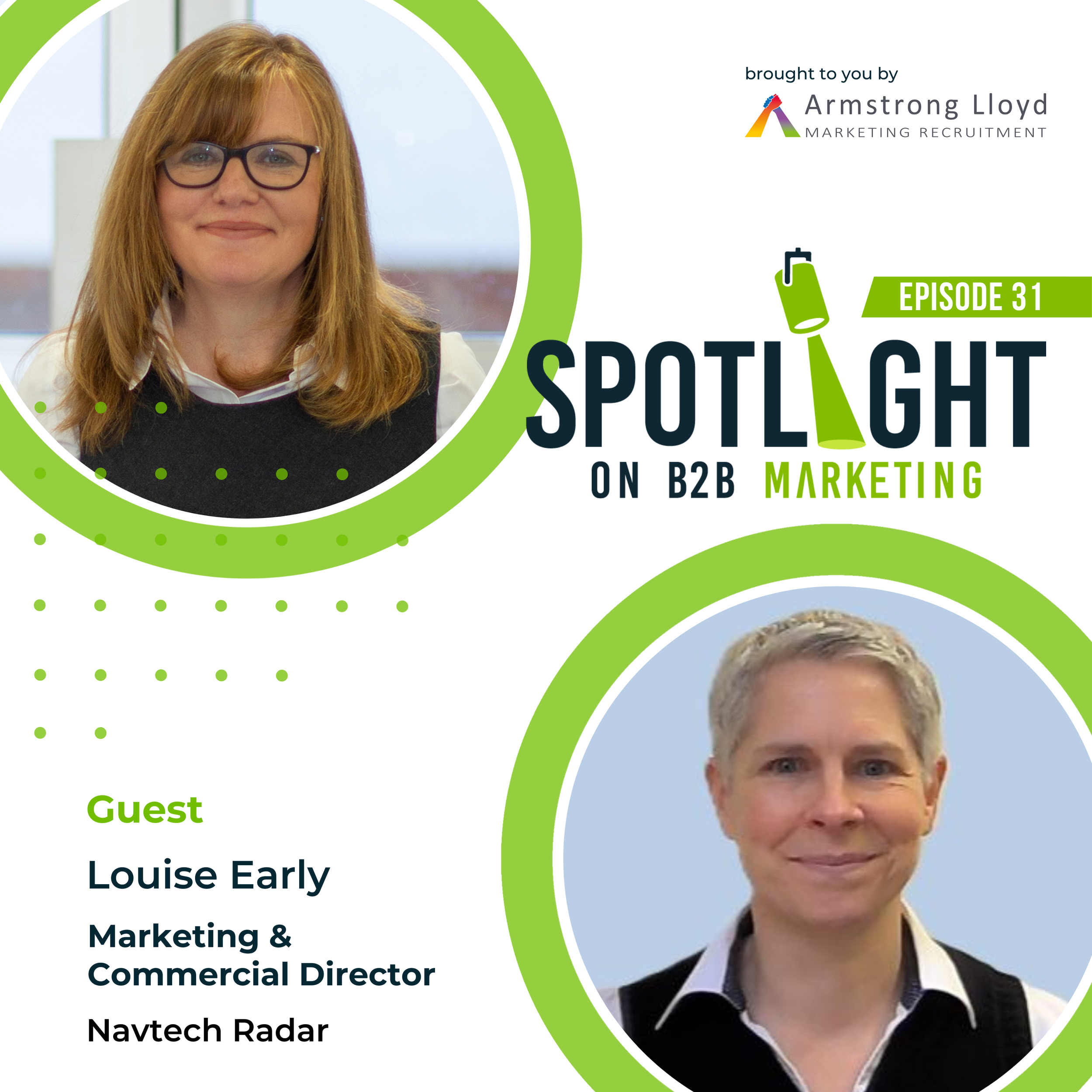
In this episode of Spotlight on B2B Marketing, host Karen Lloyd welcomes Louise Early, Marketing and Commercial Director of Navtech Radar, to explore how she is evolving that structure. By building segment teams where sales, marketing and product work together, aligned to the same market focus and success metrics.
Louise has taken an unconventional path from engineering to sales and then into marketing, and now oversees both marketing and the SDR team. Drawing on frontline experience and a deep grounding in segmentation strategy, she shares how structure really can follow strategy, and what it takes to make that work in practice.
LISTEN TO
KAREN & LOUISE
What You’ll Learn in This Episode:
✔️ Why frontline sales experience makes stronger, more empathetic marketers
✔️ How to implement true segmentation, not just talk about it
✔️ What a segment team model looks like in practice, with sales, marketing and product under one reporting line
✔️ How to define shared KPIs that are built by the team, for the team
✔️ Why curiosity is the most important hire criterion in a technical B2B environment
✔️ How Louise tests for curiosity in the interview room
✔️ The real risks of duplicating capability in a segment model — and how to manage them
✔️ Where AI fits in (and where to be cautious) when scaling segment marketing
EPISODE OUTLINE AND HIGHLIGHTS
[01:35] Louise’s career journey: from engineering to door-to-door sales to marketing leadership
[06:05] Why sales experience shapes better marketers: listening, educating, adding value
[07:47] The challenge for technology-led businesses: thinking wider than the product
[09:02] Back to basics: segmentation, targeting and positioning as the foundation
[10:03] How the segment model works: bringing sales, marketing and product into one cohesive team
[12:09] Structure in practice: reporting lines, physical co-location, and shared KPIs
[14:05] Hiring for curiosity: what to look for and how to test it at interview
[18:04] The SDR team: how they fit within the segment-focused structure
[19:29] The honest downsides: capability duplication and the cost of going deep in segments
[20:48] AI as a research tool, helpful, but approach with caution
[22:23] Final advice: start from the market, think about what customers want to receive
STRUCTURE FOLLOWS STRATEGY: BUILDING SEGMENT TEAMS THAT ACTUALLY WORK
The most striking thing about Louise’s approach is how deliberately she has built her team structure around strategy, not convention. Rather than the typical siloed arrangement; a marketing team, a sales team, a product team all operating separately, she has created segment teams where each function sits together, reports to the same leader, and works toward shared KPIs they have defined themselves.
“The magic happens when you bring together technical sales and marketing. And in the second breath, structure follows strategy.”
Louise is clear that this is not a matrix arrangement with dotted lines and competing loyalties. It is a genuine reporting structure, with team members physically co-located, developing strategy together, and holding common accountability. The result, she explains, is that teams gain access to deeper market insight, product development is better informed, and sales have the focus and tools they need to be effective.
She also acknowledges the real trade-off: this model requires duplicating certain capabilities across segments. Where a centralised team might need one content marketer, a segment model may need three — each with the same core skills but focused on different markets. Finding people who can go deep into a segment while also holding strong functional capabilities is a hiring challenge that should not be underestimated.
WHY CURIOSITY IS THE NON-NEGOTIABLE HIRE IN A TECHNICAL B2B TEAM
When it comes to building a segment team, Louise is unequivocal about the most important trait she looks for: curiosity. Not the stated kind, but the demonstrated kind.
“One of the core requisites across any hire into a technology-led business with the marketing or commercial areas is actually high curiosity.”
She uses a practical and revealing test: she places a product on the table at the start of an interview. If the candidate picks it up, examines it, and asks questions about how it works, that’s a strong signal. If they don’t, she takes that equally seriously. In a technical B2B environment, she argues, a marketer who is not genuinely curious about the product will struggle to go deep enough into any segment to add real value.
Beyond curiosity, Louise looks for people who are comfortable operating outside a purely functional silo — those who enjoy being involved end to end, rather than just executing within a narrow remit. Her own career, moving through engineering, field sales, product management, business development and strategic marketing, has shaped exactly that perspective.
KEY ADVICE FOR MARKETING LEADERS
If you are leading marketing in a technical or engineering-led business, these are the takeaways from Louise that are worth acting on.
Align your team around the segment, not the function.
Stop organising by what people do and start organising by the market they serve. Bring sales, marketing and product into a single team with a shared reporting line, shared KPIs they have built themselves, and a common market focus. When people sit together and work together, the political friction disappears — what remains are real problems, not territorial ones.
Speak the language of your audience, not your product.
Technology-led businesses have a natural pull toward specifications, capabilities and features. Resist it. Develop deep understanding of the environment your target segment operates in, the problems they are actually trying to solve, and the language they use to describe them. That understanding is what turns marketing output from noise into something that resonates.
Test for curiosity before you hire for capability.
In a technical B2B environment, the ability to do the job is the baseline, it is not what makes someone exceptional. Look for people who go deep, who ask questions beyond what is required, and who are genuinely interested in the answer. Put your product on the table at the start of the interview. If they do not pick it up, that tells you something important.
TODAY’S GUEST
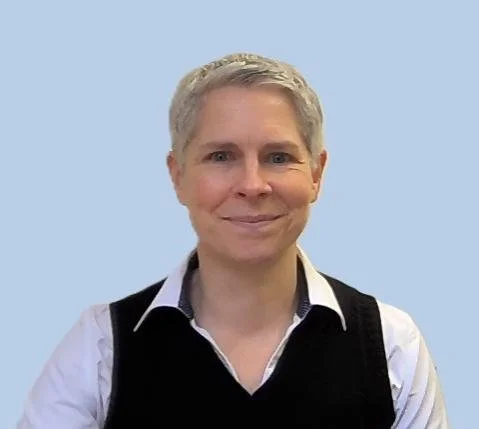
Louise Early MSc FCIM is the Marketing and Commercial Director/VP at Navtech Radar, a world-leading designer and manufacturer of radar solutions.
With a background spanning engineering, field sales, product management and strategic marketing, she has spent over two decades in advanced technology businesses, including 13 years at Crowcon Detection Instruments as Global Marketing Director.
She holds an MSc in Management and is a Fellow of the Chartered Institute of Marketing. Louise also serves as an Independent Non-Executive Director for SDI Group plc.
Connect with Louise on LinkedIn
OUR HOST

Karen Lloyd is a passionate marketing head-hunter and recruitment expert specialising in marketing and C-suite in B2B industries. With over 25 years of experience in the recruitment industry, Karen brings a unique depth of expertise that sets her apart from most recruiters.
Over her career, Karen has accumulated a wealth of experience that includes serving as a Board Director and being actively involved in growing a business for 13 years. Karen has been a part of five start-ups, giving her first-hand knowledge of the critical importance of hiring the right people.
Currently, Karen is the founder and Director of Armstrong Lloyd. She leads a very special team that partners with businesses and empowers them to build industry-leading marketing and sales teams for some of the most exciting B2B brands - from small, agile and disruptive start-ups to global giants providing a wealth of product and service offerings.
LATEST EPISODES OF THE SPOTLIGHT ON B2B MARKETING