Why More AI-Generated Content Isn't Making B2B Marketing More Effective
Most B2B marketing teams that have adopted AI are producing more content, not better outcomes. That distinction matters, because volume and value have quietly become two separate things, and a lot of marketing budget is still being spent as though they are the same.
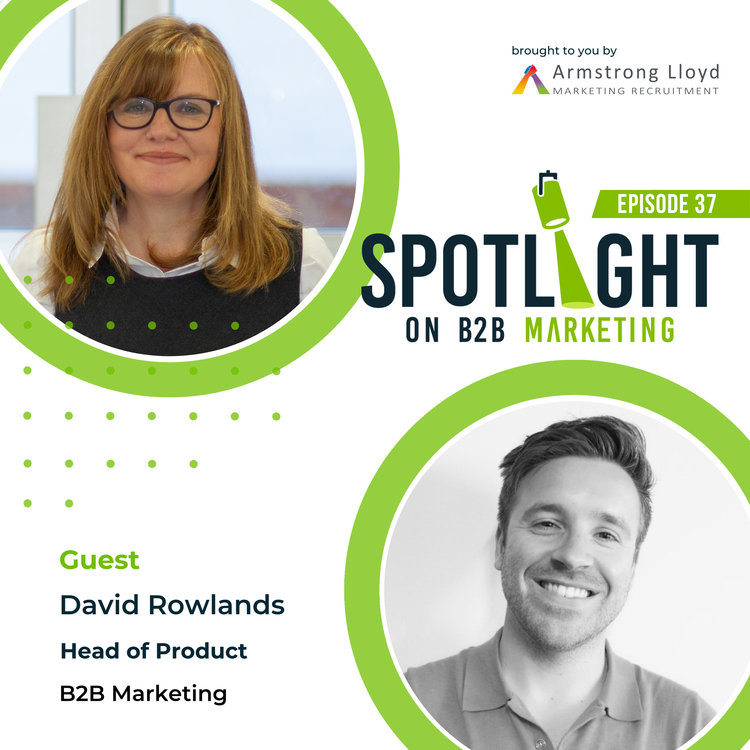
David Rowlands, Head of Product at Propolis (part of B2B Marketing), made this point directly on a recent episode of our Spotlight on B2B Marketing podcast. Propolis has spent hundreds of hours analysing conversations with senior B2B marketers, and one pattern stood out clearly from this year's B2B Marketing Awards: the marketers winning are not the ones using AI to create more, but the ones using it to think better.
The rebuild principle: insight first, output second
The best marketers, as he put it, “are trying to rebuild how marketing operates as a commercial function,” using AI to sharpen insight and analysis rather than simply to churn out assets faster. Call this the rebuild principle: AI applied to strategy and decision-making compounds in value, while AI applied only to output adds volume without adding advantage. The two approaches look identical on a content calendar and produce entirely different commercial results.
This is not a hypothetical distinction. Only 6% of B2B marketers reported that AI tools significantly improved their content performance in an August 2025 survey by MarketingProfs and Storyblok, despite the vast majority of teams now using AI in some capacity. The technology has made it easier than ever to produce content, and that is precisely the problem: when every competitor can match your output, output stops being a differentiator.
AI cannot fix a strategy that was never sound
A marketing function built around producing as much content as possible and hoping some of it converts will not be improved by AI, because “AI is just amplifying a poor and ineffective strategy”, teams without a clear commercial strategy end up using AI to do the wrong things faster, which research from Gartner's 2025 CMO Spend Survey indirectly supports: CMOs report that GenAI is delivering its strongest returns in time and cost efficiency, not in improved content performance, suggesting most teams are using it to do existing work cheaper rather than to do different, more commercial work.
A key question is whether AI is genuinely accelerating the shift toward commercial marketing, or whether it is simply giving some marketers “a place to hide from the more strategic work.” That tension, between AI as an accelerant and AI as a comfortable distraction, is arguably the defining choice facing marketing leaders right now, and it is a choice, not a default outcome of the technology itself.
Our view
Our experience placing B2B marketing leaders bears this out. The candidates commanding the strongest offers in 2025 and 2026 are not the ones who can list the AI tools they use, but the ones who can explain how they have used AI to change a strategic decision, a piece of market insight, or a commercial outcome. Boards are increasingly able to tell the difference between a marketing leader who has automated production and one who has rebuilt how their function thinks, and that distinction is starting to show up directly in salary and seniority.
What Can Business and Marketing Leaders Implement for Their Marketing Teams?
Audit what AI is actually being used for. Map current AI use across the team and separate tools applied to insight and analysis from tools applied purely to content output, then rebalance investment toward the former if the split is skewed.
Fix the strategy before scaling the output. If a campaign or content programme is underperforming, resist the urge to use AI to produce more of it faster. Diagnose the underlying strategic gap first, since AI will amplify a weak strategy as readily as a strong one.
Hire for judgement, not tool fluency. When recruiting into a growing or scaling marketing team, particularly for international expansion, prioritise candidates who can demonstrate how they have used AI to change a decision, not simply candidates who list the most AI platforms on their CV.
Treat AI productivity gains as reinvestment, not headcount reduction alone. Where AI genuinely frees up time, redirect that capacity toward strategic work such as market insight and financial case-building, rather than only using it to run a leaner team doing the same tactical work.
About Karen Lloyd

As the founder and director behind our recruitment approach, I bring almost 30 years of unique expertise spanning both recruitment and marketing. Having placed my first candidate in 1996, I've since built 5 start-ups, served as a Board Director for 25 years and developed recruitment strategies that work in competitive talent markets.
I'm also the host of "Spotlight on B2B Marketing", where I explore B2B marketing trends with industry leaders. My passion lies in helping global businesses grow their revenue-generating teams through strategic hiring and fractional CMO services.
About Armstrong Lloyd
Armstrong Lloyd goes above and beyond being a pure search firm - we partner with your business because we have all stood in your shoes as experienced hiring managers, marketing and operational business leaders. We have a hidden network that goes beyond LinkedIn searches, adverts, or referrals from ex-colleagues to ensure you're getting the top 1% of talent.
Whether you need interim leadership, marketing team building, or executive search across the UK and beyond, the team at Armstrong Lloyd are here to ensure you reach your commercial business goals by building the best marketing team and strategy to give you a competitive advantage.
Ready to transform your marketing team? Let's talk about how we can help you hire the right talent at the right time.
MORE B2B MARKETING RECRUITMENT INSIGHTS