How Segment Teams Are Redefining B2B Marketing Performance
Most B2B organisations still rely on structures that separate marketing, sales and product into their own lanes and the result is predictable: misalignment, mixed messages and teams that struggle to reflect what customers actually care about.
As markets become more complex, the businesses that win are the ones reshaping their structure around the customer, not the internal structure. Segment‑driven teams offer a clearer, more aligned way to bring sales, marketing and product together around real market insight and shared commercial outcomes.
Why Your Team Structure Might Be Your Biggest Marketing Problem
Sales questioning what marketing is doing. Marketing unsure why sales is chasing the wrong customers. Product developing solutions with limited market context. If any of this sounds familiar, the issue is rarely the people it is the structure they are working within.
For many B2B businesses, especially those in technology, engineering and manufacturing, the default is to build functional silos: a marketing team, a sales team, a product team. Each operating well within its own lane, but rarely pulling in the same direction at the same time. The result is friction, missed opportunity and marketing output that fails to resonate with the people it is supposed to reach.
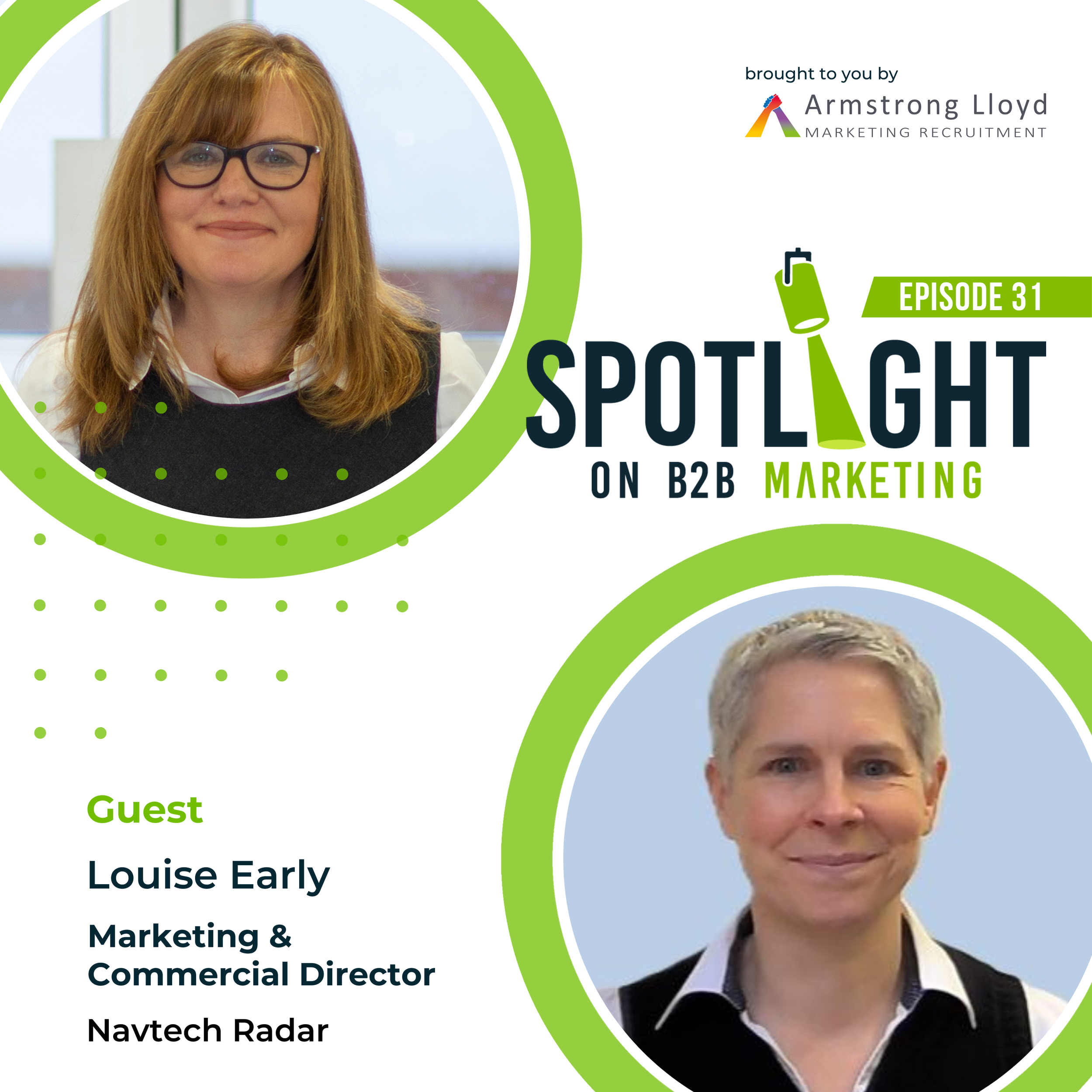
Louise Early, Marketing and Commercial Director at Navtech Radar, has introduced a structure that moves beyond the traditional siloed setup. A recent guest on the Spotlight on B2B Marketing podcast, hosted by Karen Lloyd brings an unusual combination of engineering, frontline sales and strategic marketing experience and has used every dimension of it to build a team model that challenges convention.
The Principle: Structure Follows Strategy
The principle of structure following strategy is central to high‑performing B2B organisations. Rather than building teams around traditional functions and expecting the strategy to adapt, the most effective businesses start with the market and design their structure to serve it.
This means creating segment teams where sales, marketing and product operate under a single leader, work in the same environment, develop strategy together and share KPIs that reflect the realities of their market. It is not a matrix or a dotted‑line compromise. It is a deliberate, accountable structure built around how customers think and buy.
When teams are organised in this way, the benefits compound quickly. Market insight becomes deeper and more accurate. Product development is informed by real customer context. Sales gain clarity, focus and the tools they need to be effective. The internal friction that typically drains energy in siloed organisations is replaced by alignment, shared ownership and a far stronger commercial outcome.
Speaking the Language of the Market, Not the Product
One of the most consistent failure modes in technical B2B businesses is marketing that speaks fluently about the product but poorly about the customer. Louise’s own career from electronics engineering to door-to-door sales, through product management to strategic marketing has given Louise a clear view of why this happens and how to correct it.
Her philosophy is to understand the real problems being faced and to articulate solutions in the language the target audience would actually value. Louise challenges her team to effectively “speak in their language” rather than in the language of the product specification sheet.
It is a point Karen Lloyd reinforces from the sales perspective: “I think the best salespeople ask questions rather than… you’ve got two ears and one mouth, use them in that context.” The same principle applies to marketers operating within a segment model listening deeply, understanding context and adding genuine value before driving towards a commercial outcome.
The Hiring Imperative: Curiosity Over Capability
Building a segment team demands a different kind of hire. When marketers are no longer surrounded by other marketers but sitting within cross-functional teams, the qualities that make someone truly effective shift significantly. Louise is unequivocal about what she looks for above all else:
“One of the core requisites across any hire into a technology business with the marketing or commercial areas is actually high curiosity.”
She does not assess this through direct questioning. Instead places a product on the table at the start of an interview. A candidate who picks it up, examines it and asks how it works is demonstrating something no CV can capture. “If they don’t pick it up and try and look at it and try and take it apart, that’s a really key measure of curiosity,” Louise explains.
Louise also probes how candidates respond when they are stuck. Those who say they would simply ask their manager are rarely what she is looking for. As she wants people who demonstrate “autonomous curiosity” those who are slightly obsessed with researching and becoming the expert in their area. For marketing leaders scaling or building segment-focused teams, this is a meaningful shift in hiring philosophy. Capability is the baseline. Curiosity, adaptability and genuine market interest are what make someone exceptional.
The Trade-Off: What the Segment Model Costs
Leaders who adopt this approach are clear about the real cost. When a business commits to going deep in each segment, it inevitably duplicates capability across the team. A segment model often means replicating roles that would otherwise sit centrally; where one content marketer might support the whole organisation, a segment‑led structure may require several, each focused on a specific market.
Finding people who can go genuinely deep within a segment, understand the sector, the language and the commercial dynamics, while also holding strong functional marketing skills, is a demanding brief. It calls for deliberate recruitment planning and a willingness to hire for depth rather than simply replicate existing roles across new segments.
What Can Business and Marketing Leaders Implement for Their Marketing Teams?
The segment team model has real implications for how senior leaders think about marketing structure, hiring and performance. Here are the key considerations:
Align team structure to market segments rather than functional silos. If sales, marketing and product are operating separately, the business is likely generating internal friction and missing market signals. Bringing these functions into a single, co-located team with shared KPIs developed by the team, not imposed on it changes the quality of insight, the relevance of output and the accountability of everyone involved. This is a structural change, not a cultural initiative and it requires senior leadership commitment to sustain.
Redefine what you are hiring for in a technical B2B environment. Capability is the entry requirement, not the differentiator. Prioritise curiosity, adaptability and genuine market interest. Review how your interview process actually tests for these qualities rather than rehearsed competency answers. A specialist B2B marketing recruiter can help you define the profile clearly and find candidates who genuinely meet the brief.
Plan for the resource implications of going deep. Scaling into a segment model means accepting some capability duplication and planning for it deliberately. Each segment may need dedicated resource with both functional marketing skills and genuine sector knowledge. Without this, the model risks creating teams that are broad enough to be generalists but not deep enough to add real value in their segment.
Build the team around the market, not the product. Whether your business is in technology, engineering, professional services or manufacturing, the pull towards product-led marketing is strong. Invest in genuine understanding of the environment your customers operate in, the problems they are trying to solve, and the language they use. That understanding, embedded across your segment teams, is what turns marketing investment into commercial results and positions your business to scale effectively into new markets.
About Karen Lloyd

As the founder and director behind our recruitment approach, I bring almost 30 years of unique expertise spanning both recruitment and marketing. Having placed my first candidate in 1996, I've since built 5 start-ups, served as a Board Director for 25 years and developed recruitment strategies that work in competitive talent markets.
I'm also the host of "Spotlight on B2B Marketing", where I explore B2B marketing trends with industry leaders. My passion lies in helping global businesses grow their revenue-generating teams through strategic hiring and fractional CMO services.
About Armstrong Lloyd
Armstrong Lloyd goes above and beyond being a pure search firm - we partner with your business because we have all stood in your shoes as experienced hiring managers, marketing and operational business leaders. We have a hidden network that goes beyond LinkedIn searches, adverts, or referrals from ex-colleagues to ensure you're getting the top 1% of talent.
Whether you need interim leadership, marketing team building, or executive search across the UK and beyond, the team at Armstrong Lloyd are here to ensure you reach your commercial business goals by building the best marketing team and strategy to give you a competitive advantage.
Ready to transform your marketing team? Let's talk about how we can help you hire the right talent at the right time.
MORE B2B MARKETING RECRUITMENT INSIGHTS