Why One Trade Show Never Builds a New Market
A single trade show, however well executed, has never built a new market on its own, and treating it as if it might is one of the more expensive assumptions in B2B expansion. Presence in a new region isn't purchased in a single transaction. It is built, slowly and visibly, over repeated contact, and most events budgets aren't structured with that in mind.
Why a single campaign underdelivers by design
Entering a market with no prior brand recognition means starting from zero trust, not neutral trust. Buyers who have never encountered a company before have no reason to believe it will still be there in a year, still supporting them after the sale, or still investing in their region once the initial push fades. A single event, no matter how large the stand or how sharp the messaging, cannot answer that question on its own. It can only raise it.
This is why the instinct to treat a flagship event as a market-entry strategy tends to backfire. It generates a burst of visibility and a handful of good conversations, then the pipeline doesn't materialise at the pace leadership expected, and the market gets quietly written off as unresponsive, when the real issue is that one touchpoint was never going to be enough.
A model worth naming: presence as accumulation, not an event
The more durable approach treats every market activity, event, campaign or piece of content, as one data point in a longer, visible pattern of contact with the same accounts and audience, rather than a standalone bet that has to justify itself immediately. Under this model, the reporting question changes. Instead of asking "did this event generate enough leads to justify the cost," the question becomes "are we becoming a recognisable, trusted name in this market over time." Those are different metrics, and few events budgets are built to answer the second one at all.
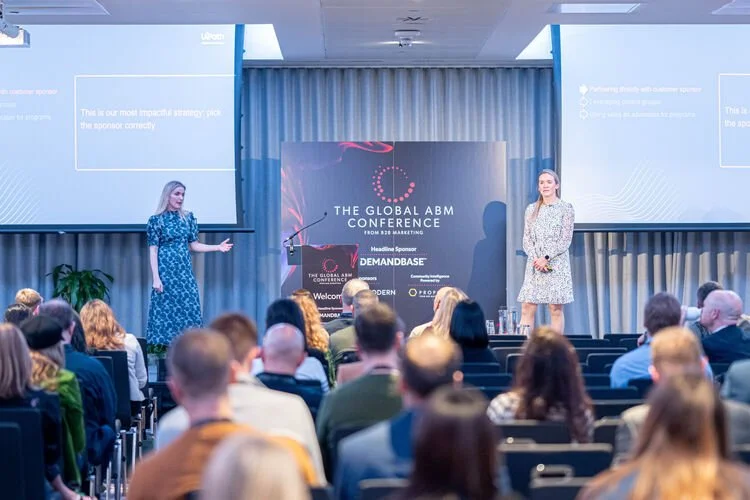
Format matters here as much as frequency. Smaller, more intimate formats, a genuine speaking slot or a roundtable, build more trust per pound spent than a large passive stand hoping for footfall, particularly where a brand has no existing recognition to lean on. Presence built through repeated, substantive contact compounds; presence built through one-off spectacle does not.
Armstrong Lloyd sees this misjudgement often in businesses expanding into the UK and Europe from the US: a single high-profile event gets budgeted as if it were the entire go-to-market motion, and when it doesn't convert immediately, the market gets blamed for being unresponsive, when the exposure simply hadn't reached the volume needed to build trust.
What the data says about repeated exposure
The scale of repetition required is not trivial. Research from HockeyStack Labs, analysing millions of B2B deals, found that larger opportunities ($100k or more in contract value) involve nearly 5,500 impressions and over 400 touchpoints before closing, roughly double the volume needed for smaller deals. Separate research puts the typical range at 20 to 50-plus touchpoints across a full B2B buying journey. Against that backdrop, one event is a single touchpoint among dozens, not the deciding moment.
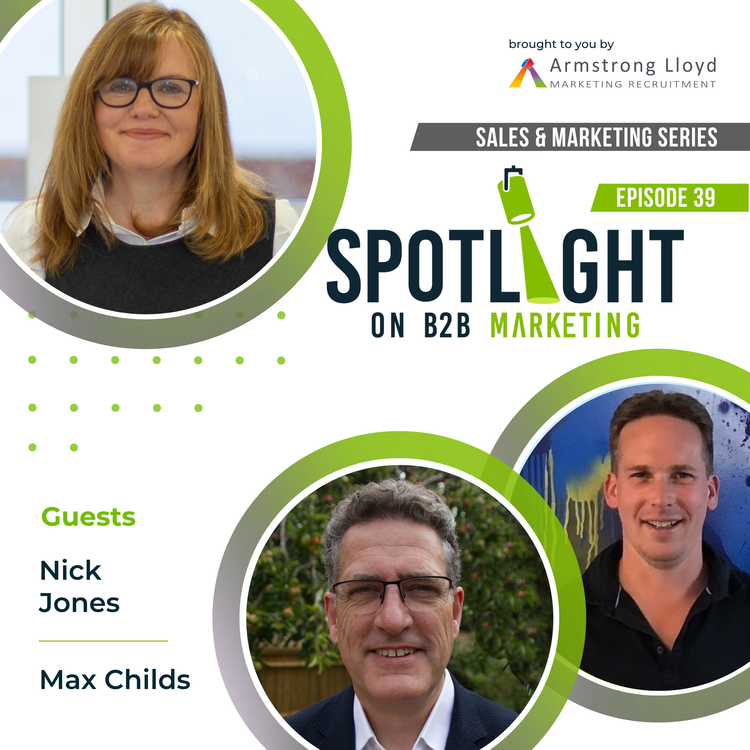
This principle came through clearly on a recent episode of Spotlight on B2B Marketing (published 22 July 2026), where host Karen Lloyd, founder of Armstrong Lloyd, spoke with Nick Jones and Max Childs about scaling a B2B pipeline across Europe. Nick Jones is the founder of Glendower Advisory and formerly Managing Director for EMEA and APAC at Lucidworks. Max Childs is a Fractional Marketing Director at Technology Marketing Europe, previously EMEA and APAC marketing lead at Lucidworks with over 20 years in B2B and SaaS marketing. Speaking from years of experience with German B2B buyers, Max put it plainly: "I don't expect that it's going to fill their pipeline for the year." Listen to the full episode here.
Discipline over time matters more than any single decision
The harder part of this model isn't the first event, it's the tenth. Sustained presence only works if a team keeps refining its approach rather than abandoning the market after a slow start or coasting once early signs look promising. As Karen put it, reflecting on what separates a lasting result from a lucky one: "you continuously improved and it wasn't just like the one trick pony." Consistency, in this sense, isn't repetition for its own sake. It's a discipline of reviewing what worked, adjusting what didn't, and staying visible long enough for trust to form.
What can business and marketing leaders implement for their marketing teams?
Budget for a presence, not a campaign. When entering a new market or region, plan spend across 12 to 18 months of repeated activity rather than concentrating it in one flagship event that has to justify itself immediately.
Choose format over footprint. A smaller event with a genuine speaking slot or roundtable builds more trust with a target account than a large passive stand, particularly where your brand has no prior recognition.
Set expectations with leadership before the first event happens. Agree in advance that early activity is exposure-building, not pipeline-generating, so a quiet first outing isn't mistaken for market failure.
Resource the team for the marathon, not the launch. Market entry into a new territory, especially one requiring local language capability, needs sustained marketing leadership. Interim or fractional support can bridge the gap while you build a permanent regional structure.
If you're planning a market entry and need marketing leadership that builds sustained presence rather than a single splash, Armstrong Lloyd can help you find the right team.
About Karen Lloyd

As the founder and director behind our recruitment approach, I bring almost 30 years of unique expertise spanning both recruitment and marketing. Having placed my first candidate in 1996, I've since built 5 start-ups, served as a Board Director for 25 years and developed recruitment strategies that work in competitive talent markets.
I'm also the host of "Spotlight on B2B Marketing", where I explore B2B marketing trends with industry leaders. My passion lies in helping global businesses grow their revenue-generating teams through strategic hiring and fractional CMO services.
About Armstrong Lloyd
Armstrong Lloyd goes above and beyond being a pure search firm - we partner with your business because we have all stood in your shoes as experienced hiring managers, marketing and operational business leaders. We have a hidden network that goes beyond LinkedIn searches, adverts, or referrals from ex-colleagues to ensure you're getting the top 1% of talent.
Whether you need interim leadership, marketing team building, or executive search across the UK and beyond, the team at Armstrong Lloyd are here to ensure you reach your commercial business goals by building the best marketing team and strategy to give you a competitive advantage.
Ready to transform your marketing team? Let's talk about how we can help you hire the right talent at the right time.
MORE B2B MARKETING RECRUITMENT INSIGHTS