Why B2B Marketing Must Prove Commercial Value, Not Just Creativity
Budget conversations that lead with a creative idea rather than a commercial outcome are arguments B2B marketers lose before they begin. As AI-generated content floods every channel and click-through rates fall in double digits, the marketing activity that actually wins investment is not the most original. It is the activity that can be defended in pipeline terms, in front of a CFO, before anyone in the room has had time to ask why it matters.
Speaking the Language of the C-Suite
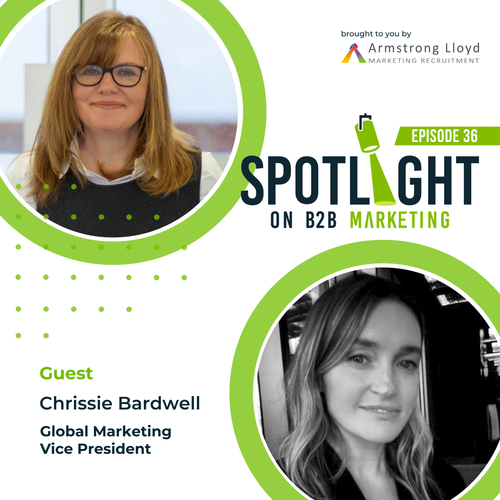
This was the experience of Chrissie Bardwell, Global Vice President of Marketing Strategy and Analytics at AVEVA, who recently joined the Spotlight on B2B Marketing podcast to discuss why experiential marketing is regaining ground in B2B, and how she builds the business case for it internally. Her view is blunt: "The moment that you walk into your CMO or somebody in your C-suite and say, I want budget because I want to create experiential marketing, then you've already lost." The alternative is to arrive with a defined segment of target accounts, the pipeline value they represent, and evidence that a face-to-face touchpoint at a specific stage of the sales cycle improves deal velocity or deal size. She also offered a sharp summary of why these human, unrepeatable moments are becoming more commercially valuable rather than less: "AI cannot replicate that. It cannot replicate a handshake."
This isn't a problem unique to experiential marketing. It's the same test every marketing initiative now faces, from content strategy to brand partnerships to AI investment itself. The activity that survives budget scrutiny is the activity built around a commercial requirement from the outset, not retrofitted with metrics after the fact.
Why Human, Unrepeatable Moments Are Becoming More Valuable
Part of what makes this case harder to ignore is the sheer scale of digital noise buyers are now navigating. Statista's tracking of Radicati Group data puts global daily email volume at around 376 billion in 2025, a figure that keeps climbing. As that volume grows faster than relevance, attention collapses, and buyers increasingly struggle to tell what is genuine from what is manufactured.
That same scale is reshaping the creative industry too. Brands leaning hardest into visibly AI-generated content have faced consumer pushback, while demand for distinctive, human-made creative work has grown. Independent research supports the broader direction here. HockeyStack's analysis of 198 B2B SaaS companies found that live and virtual events convert to qualified pipeline more efficiently than other channels, even though they represent a small share of total deal volume.
Measurement Has to Come First, Not Last
Once an activation is approved, the discipline does not stop. The strongest approach measures impact in a fixed order: pipeline impact and deal velocity first, executive engagement depth second, net new C-suite relationships added to CRM third, and brand advocacy or sentiment last. Karen Lloyd, host of the podcast and managing director of Armstrong Lloyd, put it well: "Bottom line, you're not going to go into a meeting and put this business case about doing some event that just feels emotionally right." It is the data before, during and after an activation that builds and sustains the case, not the feeling behind it.
Our View
We see this pattern across nearly every B2B marketing search we run. The candidates commanding the most competitive offers are rarely the most creative thinkers in the room. They are the ones who can translate a creative idea, whether that's an event, a partnership, or a content strategy, into a pipeline-backed business case that survives scrutiny from finance. That combination of creative judgement and commercial fluency is harder to find than either skill alone, which is exactly why it commands a premium in the current hiring market.
What Can Business and Marketing Leaders Implement for Their Marketing Teams?
Reframe every creative proposal as a commercial case before it reaches budget approval. Define the target account segment, the pipeline value at stake, and the specific point in the sales cycle where the activity is expected to accelerate or enlarge a deal, rather than presenting the idea on its creative merits alone.
Build joint accountability for pipeline between marketing and sales. Where the two functions co-own pipeline targets, the business case for experiential or account-based investment becomes far easier to make and far harder for finance to dismiss as a discretionary cost.
Fix the order in which you measure activations. Pipeline impact and deal velocity first, executive engagement depth second, net new senior contacts added to CRM third, and brand advocacy or sentiment last. Teams that lead with emotional metrics tend to lose credibility with commercially minded stakeholders.
Hire for commercial fluency alongside creative judgement, especially when scaling. A marketing leader who can build something memorable but cannot defend it in pipeline terms will struggle to secure the budget needed to grow a team or expand into new markets.
About Karen Lloyd

As the founder and director behind our recruitment approach, I bring almost 30 years of unique expertise spanning both recruitment and marketing. Having placed my first candidate in 1996, I've since built 5 start-ups, served as a Board Director for 25 years and developed recruitment strategies that work in competitive talent markets.
I'm also the host of "Spotlight on B2B Marketing", where I explore B2B marketing trends with industry leaders. My passion lies in helping global businesses grow their revenue-generating teams through strategic hiring and fractional CMO services.
About Armstrong Lloyd
Armstrong Lloyd goes above and beyond being a pure search firm - we partner with your business because we have all stood in your shoes as experienced hiring managers, marketing and operational business leaders. We have a hidden network that goes beyond LinkedIn searches, adverts, or referrals from ex-colleagues to ensure you're getting the top 1% of talent.
Whether you need interim leadership, marketing team building, or executive search across the UK and beyond, the team at Armstrong Lloyd are here to ensure you reach your commercial business goals by building the best marketing team and strategy to give you a competitive advantage.
Ready to transform your marketing team? Let's talk about how we can help you hire the right talent at the right time.
MORE B2B MARKETING RECRUITMENT INSIGHTS