Leave Your Ego at the Door: The Sales and Marketing Partnership that Disrupted an Industry
LISTEN &
DOWNLOAD ON:


A Mini Cooper convertible. A surgical robot strapped in the back. And a photographer sworn to secrecy.
In this episode of Spotlight on B2B Marketing, host Karen Lloyd is joined by Patrick Pordage, former Marketing Lead, and Steve Bell, former Chief Commercial Officer of CMR Surgical. Together they share the story of how they built one of the most disruptive challenger brands in the surgical robotics industry, taking on a competitor with 100% market share, on a fraction of the budget.
This is a real, first hand account of what happens when sales and marketing stop competing and start building something together. From a BBC launch that reached over 100 million people, to a velvet rope strategy that made surgeons desperate to get into the room, Patrick and Steve walk through the bold decisions, the friction, and the commercial results that followed.
LISTEN TO
KAREN, Patrick & Steve
What You’ll Learn in This Episode:
✔️ How a shared mission aligned an entire company, from the CEO to the factory floor
✔️ Why leaving ego out of disagreements helps to make a sales and marketing partnership work
✔️ Why B2B buyers are consumers first, and post-rationalise their decisions with data afterwards
✔️ How manufactured exclusivity created a "brand of desire" among key customers
✔️ Why trying to be a smaller version of the market leader is a losing strategy
✔️ How constraints, like not being able to reveal your own product, can become a marketing advantage
✔️ Why incentivising a commercial team on customer happiness, not commission, changed the culture
✔️ How outsiders to an industry can sometimes see opportunities insiders miss
EPISODE OUTLINE AND HIGHLIGHTS
[02:19] Why being a "mini me" was never an option
[06:34] Incentivising the commercial team on customer happiness, not commission
[09:48] Why coming from outside the industry was an advantage
[11:08] The "Black Cat at Midnight" photography project
[13:52] Introducing the velvet rope and the power of mystique
[15:43] Landing an exclusive BBC launch
[22:19] Manufacturing exclusivity at industry conferences
[25:52] Creating a "brand of desire"
[28:49] The Mini Cooper campaign and the power of WhatsApp
[31:41] Marketing's real job: making it easier for sales
[35:25] Can any company build a mission like this?
COMPETING WITH THE MARKET, NOT WITH EACH OTHER
Steve is direct about the internal dynamic most companies fall into.
"In many of the companies, and even today, the enemy is sales. Marketing is the enemy of sales. Sales is the enemy of marketing... and you end up with this internal fighting," Steve explains. "Whereas I think what we caught was lightning in a bottle when everybody was rowing in the same direction for a good long period, where our aligned goals were more important than our individual fiefdoms."
Rather than treating departmental boundaries as fixed territory to defend, Steve and Patrick built what they called a commercial engine, a single function spanning sales and marketing, aligned around one outcome. As Steve puts it elsewhere in the conversation, "The enemy was outside, not inside."
This reframing didn't happen by accident. It was reinforced by incentive design (rewarding the commercial team on customer happiness rather than commission), by a CEO who gave them a clean sheet to build from scratch, and by a mission simple enough that everyone in the business, from engineering to the factory floor, could tie their work back to it.
THE VELVET ROPE: EXCLUSIVITY AS A STRATEGY
Unable to outspend competitors many times their size, Patrick and Steve turned scarcity itself into a marketing tool.
At industry conferences where competitors spent heavily on large trade stands, Steve and Patrick instead hired a modest room, out of the way, and made access to it invite only. "The key to it was though, that there had to be something beyond the rope that was worth getting past the rope," Steve explains. "Make it like a nightclub, exclusive only to get in, and that's going to be your best marketing ever, because people will tell people."
Patrick built the experience itself: a staged operating theatre, hand-picked invitations to twenty or thirty key opinion leaders out of a thousand attendees, and a deliberate sense of theatre around the reveal. The result, in Patrick's words, was what the team called "a brand of desire," a phrase that became something close to an internal mission statement for the marketing team.
The same instinct for manufactured scarcity shaped an entire vehicle campaign months later. Unable to show the robot itself ahead of launch, the team filmed it strapped to a Mini Cooper around Cambridge landmarks, geo-targeted the footage to surgeons ahead of a conference in Italy, then parked the same Mini outside the venue. Surgeons queuing to get in recognised it immediately. As Patrick notes, the most effective channel wasn't a formal advert at all: "The most effective way that surgeons communicate is through WhatsApp." The campaign was built to travel through exactly that kind of word of mouth.
Key advice for marketing leaders
Don't build a smaller version of the market leader
Trying to imitate the dominant player at a smaller scale will only ever produce a pale comparison. Decide early what makes you genuinely different, then build the brand around that.
Treat constraints as creative material
Being unable to reveal a product, or having no budget to match competitors, is not just a limitation. Used well, a constraint can generate the story that gets you noticed.
Remember your buyer is a consumer first
Even the most analytical, data-driven buyer makes an emotional decision and rationalises it afterwards. Build the experience around that reality, not just the data sheet.
Scarcity can outperform scale
An invite-only experience for a small number of the right people can generate more word of mouth than a large, open trade stand. Exclusivity is a lever, not just a luxury tactic.
Distil your mission until it can be used by anyone
A mission only works if it can be applied by every person in the business, from the boardroom to the factory floor. If it only makes sense to leadership, it isn't finished yet.
Key advice for business leaders
Give your commercial team a clean sheet where you can
Bringing in leaders for their differentness, then asking them to follow the existing playbook, wastes the reason you hired them. A clean sheet, where possible, allows genuine change.
Incentivise the outcome you actually want
Rewarding a commercial team purely on what they sell can quietly work against the business. Consider incentivising the behaviours, like customer happiness, that build long term trust.
Treat sales and marketing as one commercial function
The moment sales and marketing start treating each other as internal competitors, the real competitor gets a free pass. Aligned goals matter more than departmental boundaries.
Allow healthy friction, without ego
Disagreement between senior leaders is not a warning sign. It becomes a problem only when ego turns disagreement into a fight for who is right, rather than what is right for the business.
Be bold about who is on the mission and who isn't
A high performer who doesn't believe in the mission can do more damage than a low performer who does. Protecting culture sometimes means making difficult calls about people.
TODAY’S GUESTS
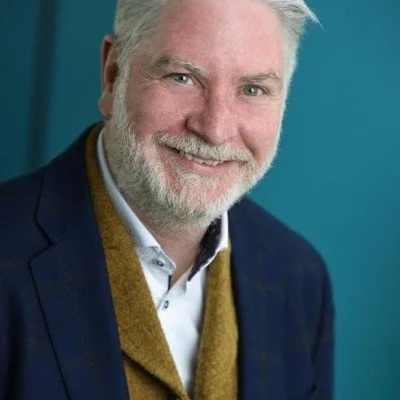
Patrick Pordage is Chief Marketing Officer at Monumo, an AI company focused on optimising complex engineering systems.
He spent over six years at CMR Surgical, most recently as Head of Strategic Brand Marketing, having joined as Head of Marketing in 2017 and played a leading role in building the brand behind the Versius surgical robot. Before CMR Surgical, Patrick spent 17 years at Cambridge Consultants as Marketing Communications Director, and began his career in various marketing roles at KPMG.
With 30 years of experience across B2B, technology, deep tech and medical device marketing, Patrick has a track record of building market-leading brands that deliver profitable growth.
Connect with Patrick on LinkedIn
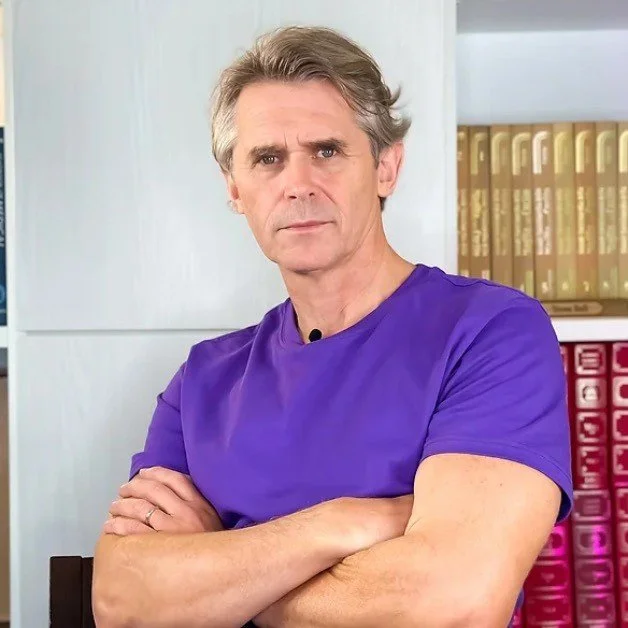
Steve Bell is Co-Founder of Synthetic Frame and an advisor across multiple MedTech and health-tech start-ups, including Orca1.ai, and CardioSentry HealthTech Solutions.
He spent over six years at CMR Surgical as Chief Commercial Officer, where he was part of the senior team that built Europe's biggest ever MedTech unicorn, commercialising the Versius surgical robot globally.
Over a 30 year career spanning Johnson & Johnson, Ethicon, and multiple medical device start-ups, Steve has raised over $1.5 billion in start-up funding and led the commercialisation of technologies across surgical robotics, cardiology, general surgery and digital health. He also runs How to Startup in MedTech, sharing lessons from his experience with founders in the space.
Connect with Steve on LinkedIn
OUR HOST

Karen Lloyd is a passionate marketing head-hunter and recruitment expert specialising in marketing and C-suite in B2B industries. With over 25 years of experience in the recruitment industry, Karen brings a unique depth of expertise that sets her apart from most recruiters.
Over her career, Karen has accumulated a wealth of experience that includes serving as a Board Director and being actively involved in growing a business for 13 years. Karen has been a part of five start-ups, giving her first-hand knowledge of the critical importance of hiring the right people.
Currently, Karen is the founder and Director of Armstrong Lloyd. She leads a very special team that partners with businesses and empowers them to build industry-leading marketing and sales teams for some of the most exciting B2B brands - from small, agile and disruptive start-ups to global giants providing a wealth of product and service offerings.
LATEST EPISODES OF THE SPOTLIGHT ON B2B MARKETING